Best Practices to Get Started with AI Product Prediction
Learn the best practices to implement AI product prediction effectively. Discover how businesses can drive smarter decisions.
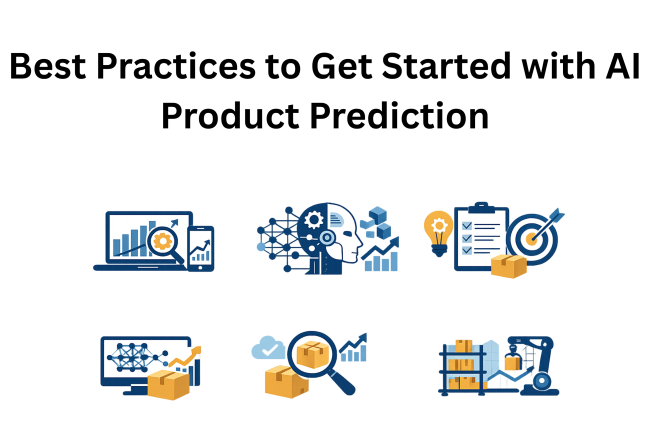
Adopting AI product prediction is a useful tactic that fashion and retail companies may employ to maintain their competitiveness; it is no longer a futuristic idea. The issue facing CEOs and decision-makers is not whether or not to use AI, but rather how to do so successfully. It takes a methodical strategy, the correct mindset, and an emphasis on long-term value to get started.


Why Getting Started the Right Way Matters
Without a defined approach, diving headfirst into AI product prediction might result in resource waste and disappointing outcomes. Businesses that use AI successfully adopt a gradual, strategic strategy, coordinating technology with actual business objectives.
1. Define Clear Business Objectives
Determine your goals before putting AI product prediction into practice. Are you attempting to cut back on surplus inventory? Boost the forecasting of demand? or improve choices on product design?
Well-defined objectives benefit you:
-
Select the appropriate models and tools.
-
Efficiently gauge success
-
Align teams from different departments
Even the most sophisticated AI systems may be unable to produce significant results in the absence of clear objectives.
2. Start with High-Quality Data
AI product prediction is based on data. The quality of your data has a major impact on how accurate your predictions are.
Pay attention to:
-
Sales data from the past
-
Consumer preferences and behaviour
-
Market and seasonal patterns
-
External information, like signals from social media
Your AI models will generate trustworthy insights if the data is clean and organised. Early data management investment will result in later time and cost savings.
3. Begin with a Pilot Project
Start small rather than implementing AI throughout the entire company. You can test AI product prediction in a controlled setting with a pilot project.
For instance:
-
Estimate a particular product category's demand
-
Forecasting tests for a certain season
-
Examine consumer preferences in a certain area.
Before scaling, this strategy lowers risk and offers insightful lessons.
4. Select the Appropriate Technology Partner
AI solutions are not all made equal. Success depends on choosing the appropriate partner or platform.
When assessing AI product prediction solutions, take into account:
-
Integration with current systems is simple.
-
Scalability when your company expands
-
Openness in the process of making forecasts
-
Assistance and knowledge from the supplier
Implementation can be accelerated and common hazards can be avoided with the support of a trustworthy partner.
5. Build Cross-Functional Collaboration
AI product prediction is a business revolution rather than merely a technological endeavour. Data science, operations, marketing, merchandising, and other teams must work together.
Motivate:
-
Open lines of communication between departments
-
KPIs and success measurements that are shared
-
AI literacy training initiatives
AI insights can be used more successfully when teams collaborate.
6. Focus on Continuous Improvement First
Artificial intelligence models are not "set and forget." Over time, they must be updated and improved.
To optimise AI product prediction's impact:
-
Keep an eye on the model's performance.
-
Add new trends to data inputs.
-
Adapt tactics in light of new information
In a market that is changing quickly, constant development guarantees that your forecasts stay accurate.
7. Prioritize Ethical and Transparent AI Use
Adoption of AI depends heavily on trust. Companies need to make sure that their AI product prediction procedures are moral, open, and legal.
This comprises:
-
Safeguarding client information
-
Preventing prejudiced forecasts
-
Being open about the application of AI
Credibility is increased with stakeholders and customers with responsible AI.
In conclusion
It doesn't have to be difficult to get started with AI product prediction. Businesses can unlock substantial value by concentrating on precise objectives, high-quality data, and a phased implementation strategy.
Treating AI as a strategic investment rather than a one-time initiative is crucial for CEOs and company executives. When implemented properly, AI product prediction can lead to more intelligent choices, lower risks, and provide businesses with a significant competitive edge.
What's Your Reaction?